
Well pressure tank checks for Woodside and South Coast homes
Maintaining a private well pressure tank in Woodside or the South Coast prevents well pump short-cycling and motor burnout. Testing the air pre-charge pressure through the top Schrader valve every six months and ensuring the tank is empty during measurement confirms the rubber diaphragm has not ruptured.
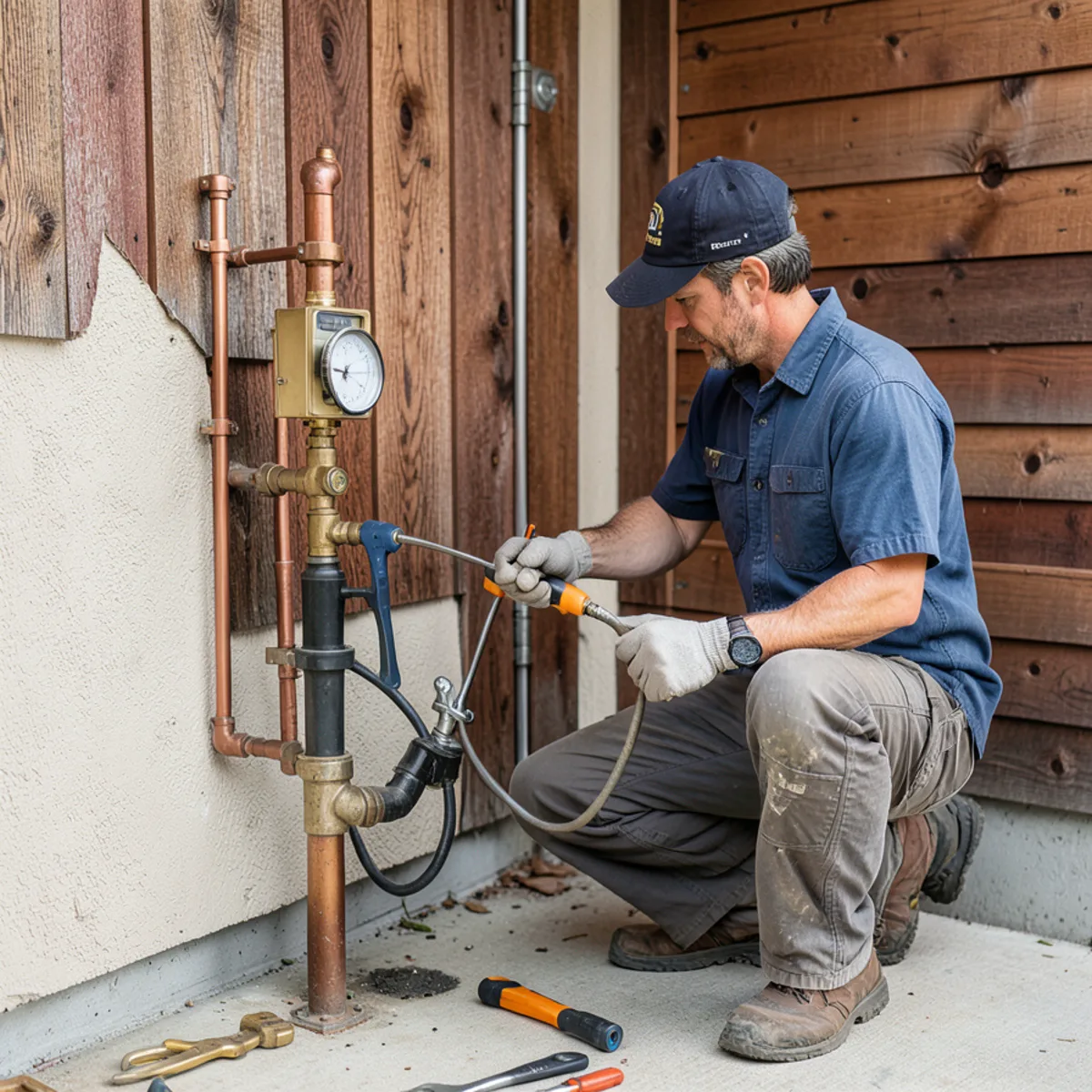
Table of Contents
- 1.Understanding Captive Air Bladder Tank Operation
- 2.Testing Pre-Charge Pressure and Schrader Valve Integrity
- 3.Diagnosing Waterlogging, Short-Cycling and Bladder Tears
- 4.Sizing and Replacing Aging Pressure Tanks in Mountain Environments
- 5.Well Pressure Tank Troubleshooting Matrix
- 6.Frequently Asked Questions
Understanding Captive Air Bladder Tank Operation
In private domestic well systems common throughout Woodside, Emerald Lake Hills, and coastal San Mateo County, the captive air pressure tank (such as an Amtrol Well-X-Trol) acts as the mechanical buffer for your water system. The tank consists of an outer welded steel shell containing an internal flexible butyl rubber bladder that separates stored well water from a pre-pressurized air cushion. Because air is compressible and water is not, the compressed air cushion maintains consistent household water pressure between 40 and 60 PSI, allowing you to draw several gallons of water before the pressure drops enough to signal the deep-well submersible pump to start.
Key Takeaways
- Butyl rubber diaphragm separates pressurized water volume from pre-charged air cushion
- Compressed air cushion maintains consistent 40 to 60 PSI residential line pressure
- Provides several gallons of usable drawdown volume without starting the well pump
- Protects submersible pump motors from destructive rapid on-off cycling
Testing Pre-Charge Pressure and Schrader Valve Integrity
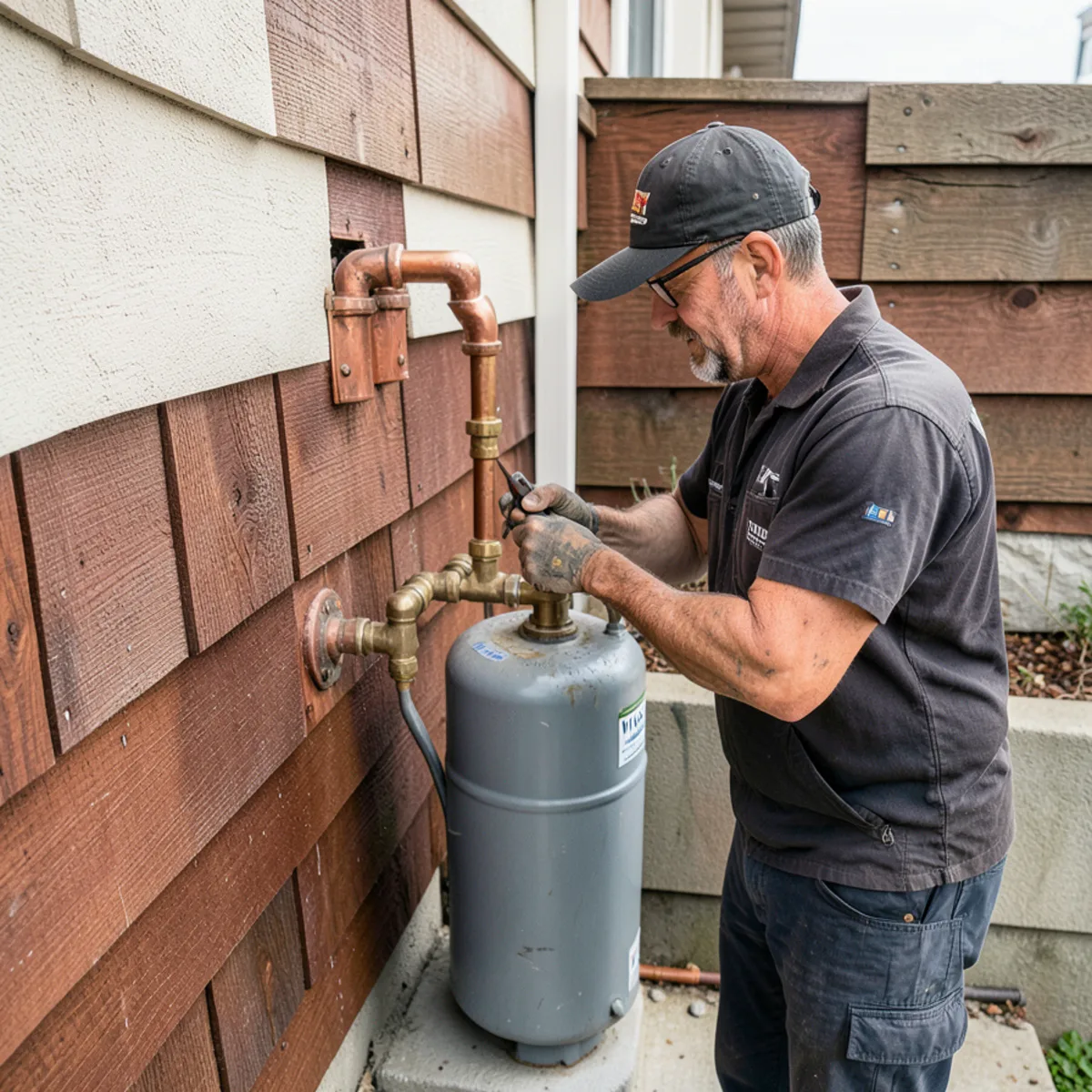
Accurate pressure tank maintenance requires isolating the tank from active water pressure before testing the air pre-charge. Shut off electrical power to the well pump at the subpanel, connect a hose to the tank drain bib, and open it completely until the system pressure gauge drops to 0 PSI. Locate the brass Schrader air valve on top of the tank dome. Depress the valve core momentarily; if any moisture or water droplets spit out, the internal bladder has ruptured, and the entire tank must be replaced. If only dry air escapes, attach a calibrated digital tire gauge. The air pre-charge must measure exactly 2 PSI below the cut-in pressure of your pressure switch (e.g., 28 PSI for a 30/50 switch, or 38 PSI for a 40/60 switch). Homeowners should note that experienced local plumbers dispatched from Valota Road carry precision diagnostic testing instruments to verify code compliance before finalizing the service scope.
Key Takeaways
- Shut off well pump breaker and drain system pressure completely to 0 PSI before testing
- Water escaping from top Schrader air valve confirms a torn internal rubber bladder
- Use calibrated digital tire pressure gauge to measure static air pre-charge
- Air pre-charge must be calibrated exactly 2 PSI below pressure switch cut-in threshold
Diagnosing Waterlogging, Short-Cycling and Bladder Tears
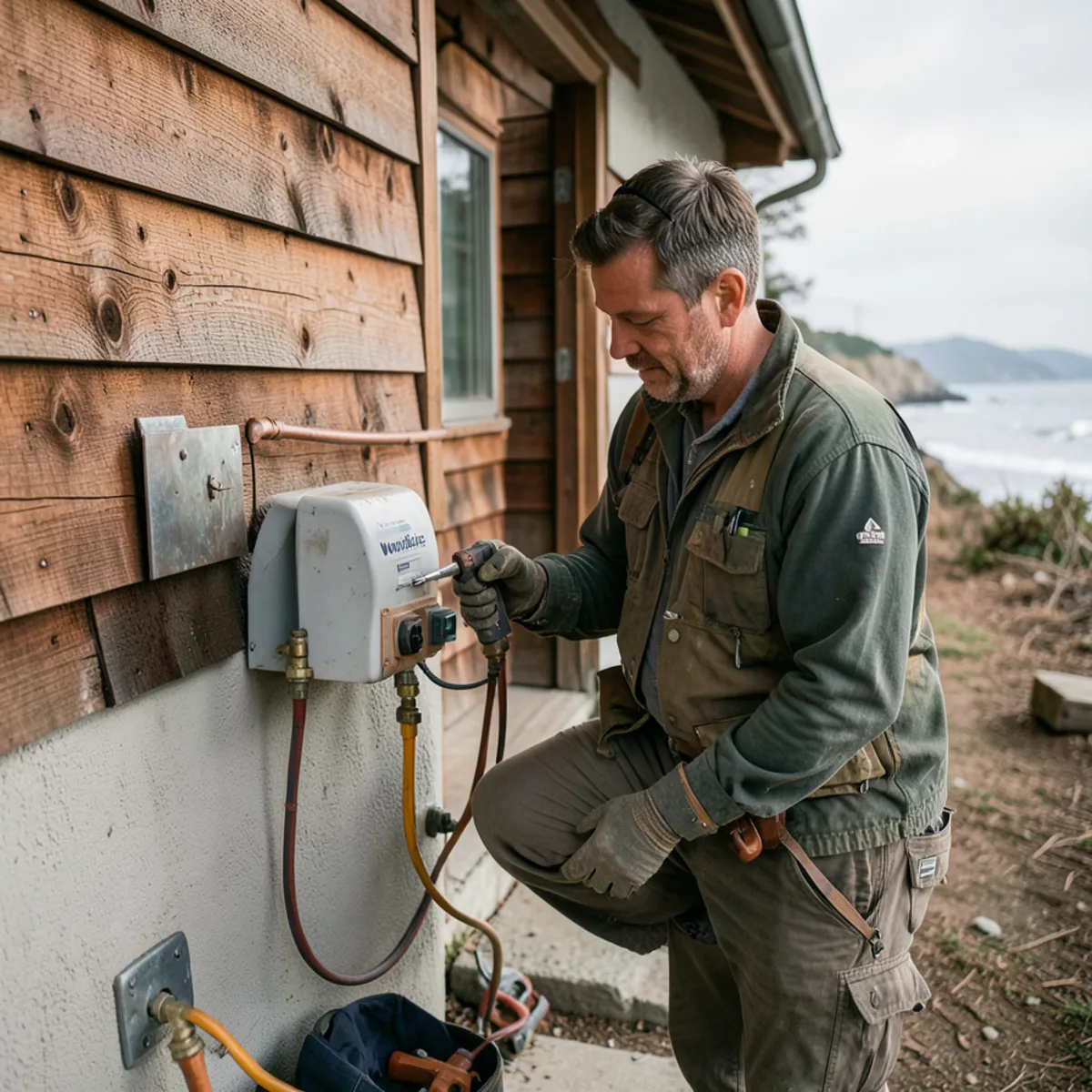
A 'waterlogged' pressure tank is the leading cause of premature well pump motor burnout across rural Peninsula properties. When the internal rubber diaphragm ruptures or permeation depletes the air cushion, water fills the entire tank shell. Because water cannot compress, opening a faucet causes system pressure to plummet from 60 to 40 PSI in two seconds, triggering the pump. Closing the faucet shoots pressure back to 60 PSI instantly, shutting the pump off. This violent 'short-cycling' can cycle the pump motor 50 times an hour, overheating motor windings, welding pressure switch contacts together, and destroying starting capacitors.
Key Takeaways
- Waterlogged tanks eliminate compressible air cushion, causing rapid pressure swings
- Pump clicks on and off violently every 5 to 10 seconds during water usage
- Rapid motor starts overheat down-hole pump windings and destroy starting capacitors
- Knuckle tap test reveals dull solid sound across entire tank shell instead of hollow top
Sizing and Replacing Aging Pressure Tanks in Mountain Environments
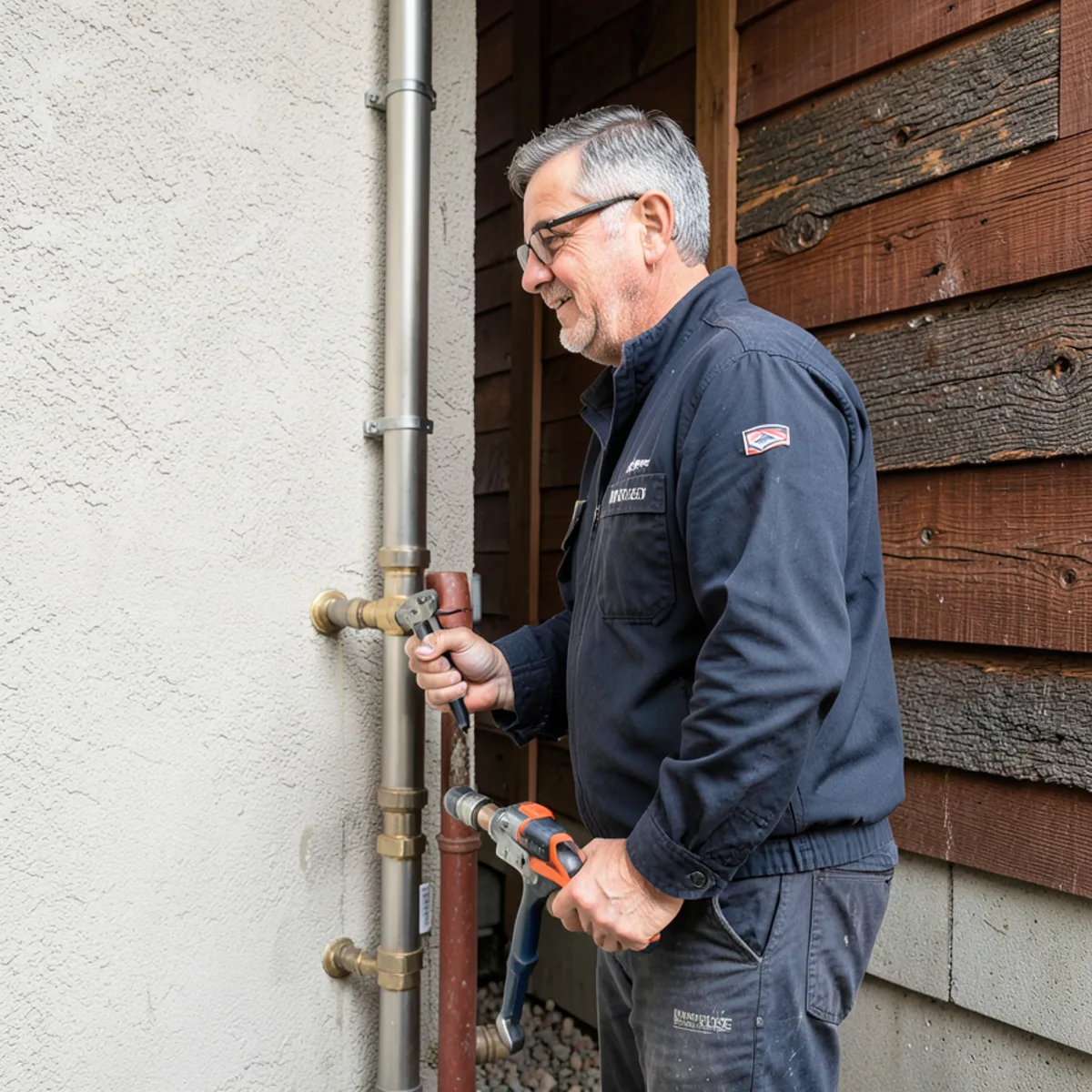
Replacing an undersized or failing pressure tank requires calculating adequate pump runtime under California Department of Water Resources guidelines. To ensure adequate motor cooling, a submersible well pump should run for a minimum of 60 to 120 seconds per cycle. In Woodside homes with 10 GPM well pumps, this requires a pressure tank providing at least 10 to 20 gallons of usable drawdown volume—typically requiring an 80-gallon to 120-gallon tank (such as an Amtrol WX-302 or WX-350). In humid coastal fog environments like Pescadero, composite fiberglass pressure tanks (such as Flexcon Flow-Rite) are recommended to eliminate exterior steel rust. All completed installations and replacements are fully permitted and inspected in coordination with municipal building officials to guarantee long-term property protection and legal compliance under the 2025 California Plumbing Code.
Key Takeaways
- Tank capacity must provide minimum 60 to 120 seconds of continuous pump runtime
- Calculate usable drawdown volume based on well pump flow rate in gallons per minute
- Large-capacity 80 to 120 gallon tanks reduce cycle frequency on high-draw properties
- Composite fiberglass tanks eliminate exterior salt air rust in coastal fog microclimates
Well Pressure Tank Troubleshooting Matrix
| Symptom | Mechanical Defect | Immediate Risk | Action Required |
|---|---|---|---|
| Water spurts from air valve | Ruptured butyl diaphragm | Severe (tank completely waterlogged) | Replace pressure tank assembly |
| Air pressure reads 10 PSI low | Natural air loss through Schrader valve | Moderate (pump cycles too often) | Recharge tank with bicycle air pump to target PSI |
| Pump short-cycles every 3 seconds | Waterlogged tank / zero air cushion | High (motor control box burnout) | Verify tank emptiness and test pre-charge |
| Corrosion around bottom union | Electrochemical galvanic reaction | Moderate (slow baseline drip) | Install brass dielectric union transition |
Common Questions On This Topic
Frequently Asked Questions
Find clear answers to common questions about local plumbing codes, repairs, and our Redwood City service procedures.
Air pre-charge should be tested semi-annually, ideally in spring and fall. Air can slowly permeate through the rubber bladder over time, requiring periodic top-ups with a standard bicycle tire pump to maintain the critical 2 PSI differential below cut-in pressure.
Regulatory References & Standards
- • California Plumbing Code Section 601.0
- • Water Systems Council Well Owner Manual
Related Plumbing Services
Target Service Communities
Need professional assistance with this plumbing issue?
Our technicians dispatch daily from 1835 Valota Rd. Call now to speak directly with our Redwood City team.