
Plumbing in Ladera and West Menlo Park mid-century homes
Mid-century ranch and California modern homes in Ladera and West Menlo Park require specialized care for concrete slab foundation plumbing, in-slab radiant heating loops, and Cal Water Bear Gulch pressure management. Upgrading corroded galvanized pipes and installing calibrated pressure reducing valves preserves vintage mid-century architecture.
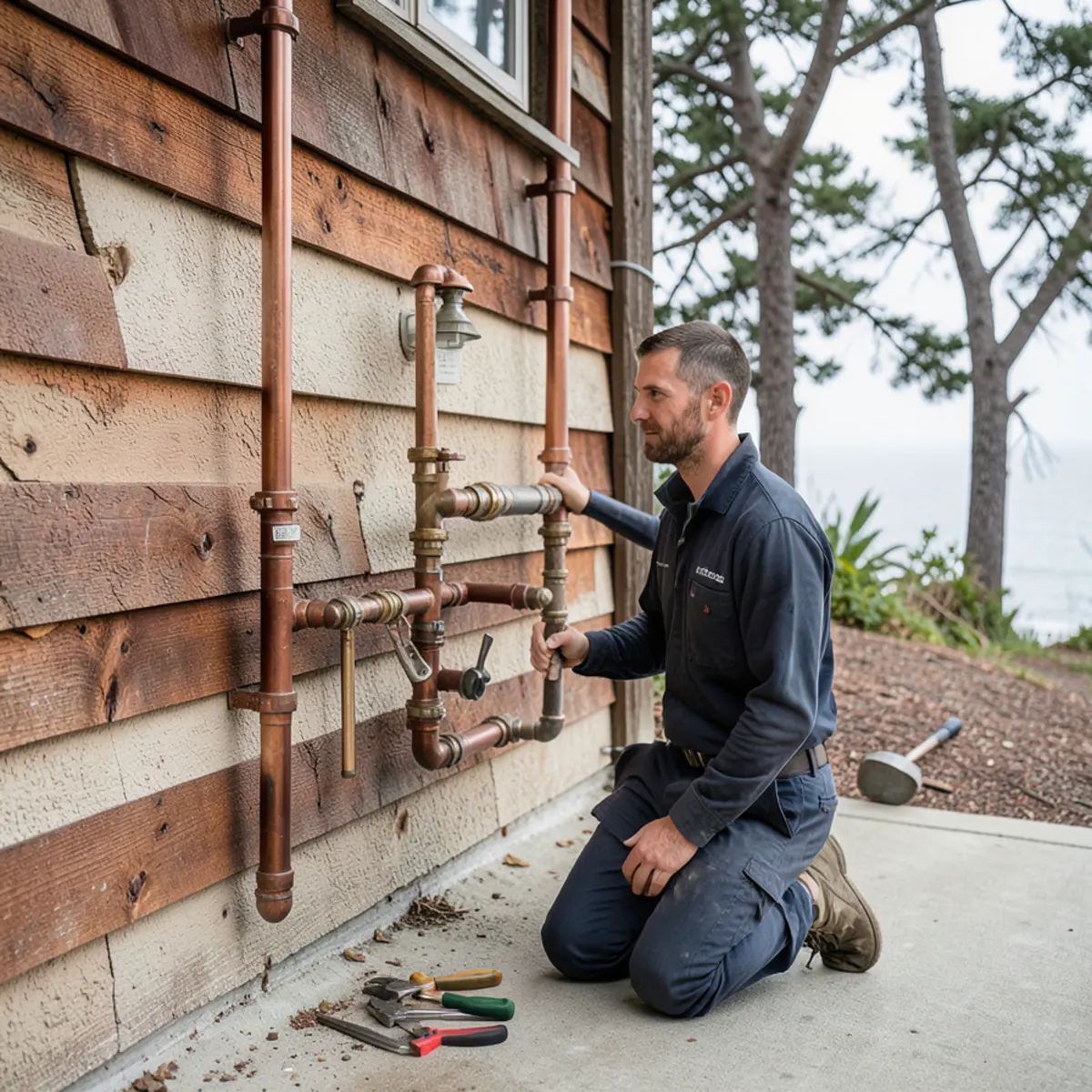
Table of Contents
- 1.Mid-Century Modern Architecture and In-Slab Radiant Heating
- 2.Concealed Under-Slab Radiant Leaks: Thermal Imaging and Acoustic Detection
- 3.Slab Leak Remediation: Overhead PEX-a Reroutes vs In-Slab Patching
- 4.Low-Slope Drainage and West Bay Sanitary District Regulations
- 5.Mid-Century Home Plumbing Maintenance Checklist
- 6.Frequently Asked Questions
Mid-Century Modern Architecture and In-Slab Radiant Heating
Ladera and West Menlo Park are celebrated unincorporated residential enclaves developed primarily in the late 1940s through 1960s. Ladera, planned as a cooperative community, features distinctive mid-century modern architecture characterized by post-and-beam construction, floor-to-ceiling glass walls, flat or low-pitch tar-and-gravel roofs, and concrete slab-on-grade foundations. To heat these open-concept homes without visible wall radiators, builders embedded closed-loop hydronic radiant heating systems directly into the concrete floor slab. Copper or welded steel heating coils circulate 120°F water to warm the concrete floor, providing silent, radiant comfort. In these architectural designs, preserving the clean sightlines of exposed redwood tongue-and-groove ceilings and post-and-beam construction requires careful hidden pipe routing techniques.
Key Takeaways
- Celebrated mid-century modern post-and-beam architecture on slab-on-grade foundations
- Closed-loop hydronic radiant heating coils embedded directly within concrete floor slabs
- No basements, attics, or wall cavities for conventional pipe routing and maintenance
- Original 1950s copper and steel in-slab radiant tubing is reaching end of mechanical life
Concealed Under-Slab Radiant Leaks: Thermal Imaging and Acoustic Detection
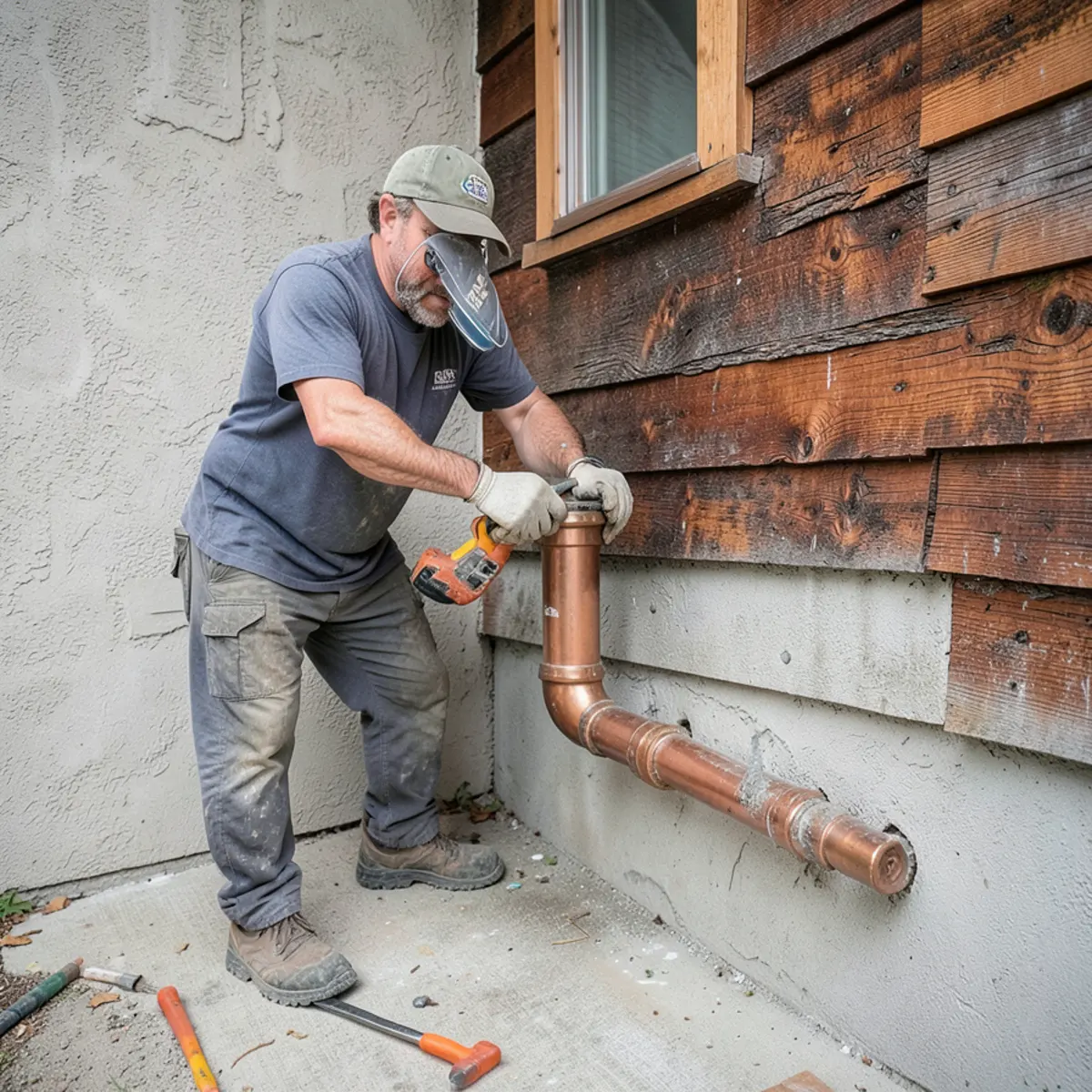
After 60 to 75 years of continuous thermal expansion, chemical reactions with concrete minerals, and external moisture, in-slab copper pipes develop microscopic pinhole breaches. Homeowners typically detect an under-slab leak through three symptoms: localized warm spots on finished hardwood, cork, or tile flooring; the domestic boiler losing pressure and short-cycling constantly; or sudden dramatic spikes in monthly PG&E natural gas bills. Detecting an in-slab leak without destroying irreplaceable architectural flooring requires non-destructive diagnostics. Our plumbers utilize high-resolution FLIR thermal imaging cameras to visualize thermal infrared plumes through concrete, paired with acoustic ground microphones to pinpoint the exact leak location. Because radiant heating operates under continuous water pressure, addressing minor under-slab pressure drops immediately prevents structural concrete softening and extensive flooring repairs.
Key Takeaways
- Warm spots on floor, boiler pressure loss, and high water or gas bills indicate slab leaks
- Chemical reactions between concrete lime and copper tubing cause external pinhole pitting
- FLIR infrared thermal cameras detect heat signatures radiating through concrete floors
- Acoustic listening discs pinpoint subterranean water hiss without invasive jackhammering
Slab Leak Remediation: Overhead PEX-a Reroutes vs In-Slab Patching
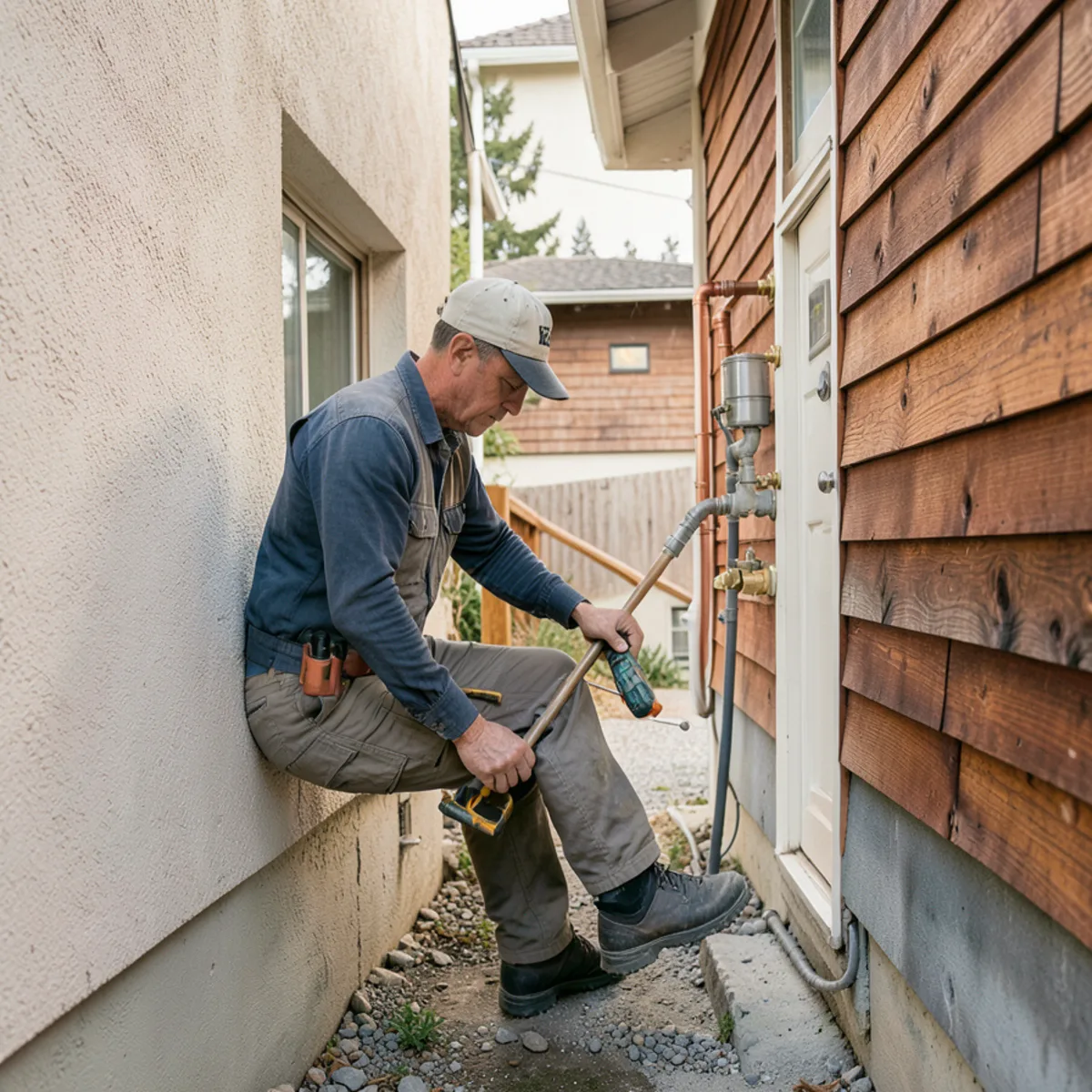
When an under-slab pipe fails, jackhammering through the finished concrete slab to perform a solder patch is generally an ill-advised strategy. Breaking concrete fractures surrounding radiant coils, damages architectural floor coverings, and creates a weak solder joint that will likely fail again nearby. The proven, long-term engineering solution is an overhead bypass repipe. Our technicians isolate and abandon the failing under-slab pipe segment. Using flexible Uponor ASTM F1960 PEX-a expansion piping, we route new hot and cold water distribution lines through exterior architectural soffits, flat-roof utility chases, or perimeter baseboard conduits, restoring reliable water service without concrete demolition. PEX-a piping systems installed by our licensed technicians expand and contract silently, eliminating thermal expansion clicking noises commonly heard in legacy copper systems. Homeowners who replace under-slab lines with Uponor PEX-a enjoy reliable water flow and enhanced structural protection for their real estate investment.
Key Takeaways
- Jackhammering finished concrete slabs damages adjacent radiant coils and fine flooring
- In-slab solder patches do not stop widespread galvanic corrosion across aging copper runs
- Overhead PEX-a reroutes bypass failing underground pipes cleanly and permanently
- Piping routed through architectural soffits, roof raceways, or decorative baseboard covers
Low-Slope Drainage and West Bay Sanitary District Regulations
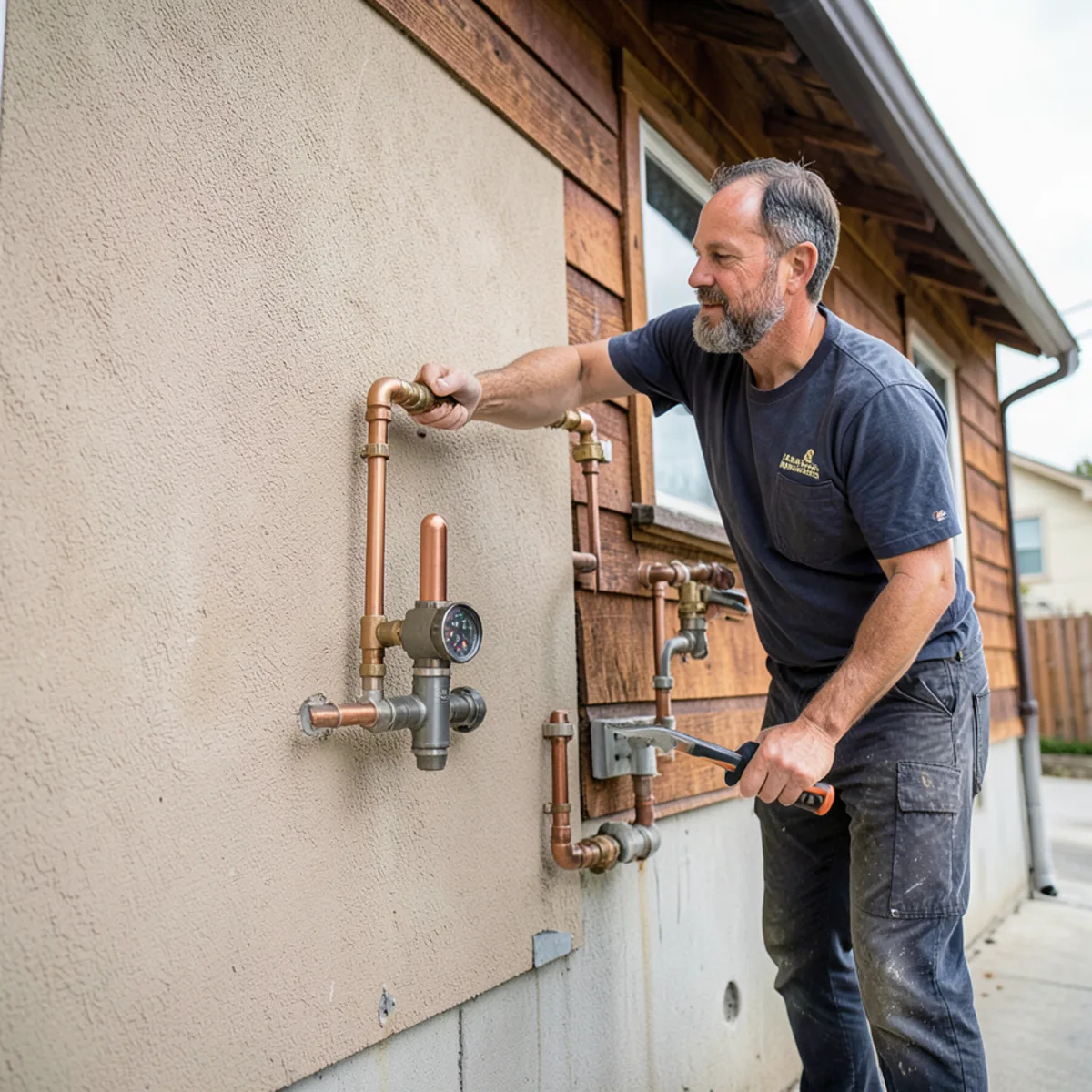
Wastewater disposal in Ladera and West Menlo Park presents unique challenges due to low-profile architectural designs and flat sewer gradients. Under-slab cast iron sanitary sewer lines installed in the 1950s suffer from bottom-channel corrosion, where acidic waste erodes the bottom pipe wall, catching paper waste and causing persistent blockages. In West Menlo Park, wastewater collection is overseen by the West Bay Sanitary District (WBSD), which enforces strict lateral maintenance and testing codes. Upgrading aging sewer laterals utilizing trenchless HDPE pipe bursting restores maximum hydraulic flow while preserving mature oak trees and native landscaping. Regular video camera inspections of underground lines ensure that tree root intrusions from mature California live oaks are caught before causing under-slab structural backups.
Key Takeaways
- Under-slab cast iron sewer pipes suffer from bottom-channel erosion and snagging clogs
- Low-slope architectural designs require precision sewer pipe grading under CPC Chapter 7
- Wastewater collection regulated strictly by the West Bay Sanitary District (WBSD)
- Trenchless HDPE pipe bursting replaces degraded lines without digging up driveways
Mid-Century Home Plumbing Maintenance Checklist
| System Component | Specific Mid-Century Issue | Recommended Protocol |
|---|---|---|
| Under-slab copper supply | Pinhole leaks from concrete aggregate friction | Acoustic leak detection + PEX overhead reroute |
| In-slab radiant heating | Zone oxygen corrosion & boiler short-cycling | Purge air; add glycol inhibitor; check expansion tank |
| Cal Water meter supply | Pressure surges exceeding 85 PSI | Install brass lead-free Wilkins 600XL regulator |
| Under-slab cast iron drain | Bottom channeling and grease scale | Sewer camera inspection + hydro-jetting or CIPP |
Common Questions On This Topic
Frequently Asked Questions
Find clear answers to common questions about local plumbing codes, repairs, and our Redwood City service procedures.
Yes. For minor pinhole leaks in closed-loop radiant heating systems, plumbers can introduce specialized liquid chemical sealant formulations (such as Fernox or Leak-Seal) that circulate through the boiler water and seal small fissures from the inside out. For domestic potable water lines, an overhead PEX-a reroute is required.
Regulatory References & Standards
- • California Plumbing Code Section 609.3
- • West Bay Sanitary District Code
Need professional assistance with this plumbing issue?
Our technicians dispatch daily from 1835 Valota Rd. Call now to speak directly with our Redwood City team.