
Adding a gas line for a range, dryer or outdoor fire pit
Adding a new natural gas line for high-BTU kitchen ranges, outdoor fire pits, or tankless water heaters requires calculating total connected gas load to ensure existing gas meters and main supply pipes are adequately sized. Under Redwood City building codes, all new gas installations require a plumbing permit and an inspector-witnessed 10 PSI pressure gauge test.
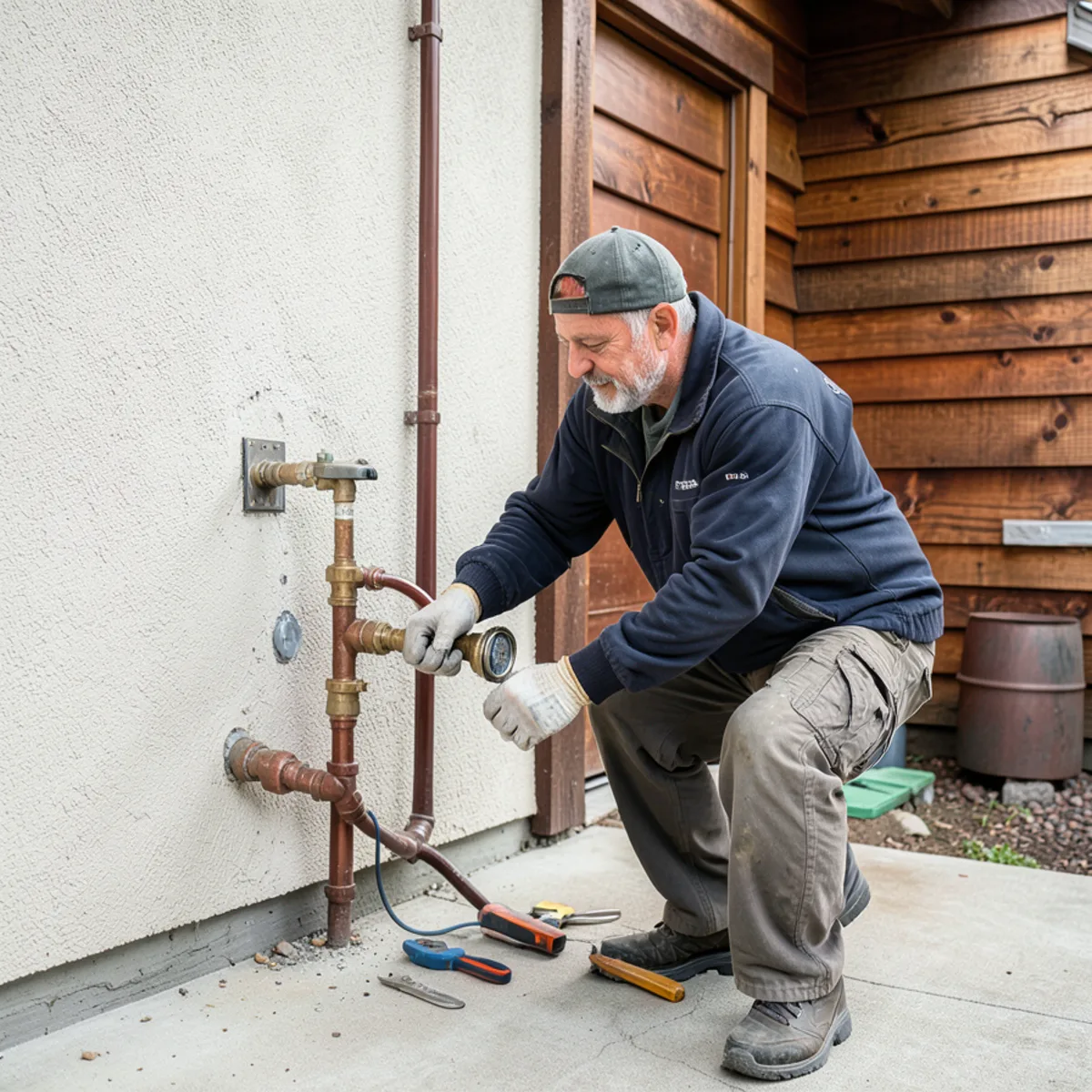
Table of Contents
- 1.Calculating Total Gas Load: BTU Sizing and Meter Capacity
- 2.Approved Materials: Schedule 40 Black Iron vs Corrugated Stainless (CSST)
- 3.Redwood City Permitting and Air Pressure Testing Protocols
- 4.Mandatory Safety Fixtures: Dedicated Shutoffs, Sediment Traps and Seismic Valves
- 5.Common Household Gas Appliance BTU Demand Ratings
- 6.Frequently Asked Questions
Calculating Total Gas Load: BTU Sizing and Meter Capacity
Upgrading a kitchen with a high-output professional gas range (60,000 to 100,000 BTU) or installing an outdoor tankless water heater (199,000 BTU) requires precise mathematical load calculations. Under California Plumbing Code (CPC) Chapter 12, gas pipe sizing is determined by the total British Thermal Unit (BTU) demand of all connected appliances, the longest distance from the gas meter to the furthest fixture, and available gas pressure. Most residential meters installed by Pacific Gas and Electric (PG&E) deliver low pressure (typically 7 to 9 inches of water column or 1/4 PSI). If aggregate household gas appliances exceed the standard 250 cubic feet per hour (CFH) meter rating, an upgraded 400 CFH meter from PG&E is required to prevent appliance starvation.
Key Takeaways
- Total household gas load calculated using aggregate BTU consumption figures
- Pipe sizing governed by longest run distance under CPC Chapter 12 tables
- Standard PG&E residential gas meters provide 250 CFH (approx. 250,000 BTU)
- Commercial-style ranges and tankless heaters often necessitate 400 CFH meter upgrades
Approved Materials: Schedule 40 Black Iron vs Corrugated Stainless (CSST)
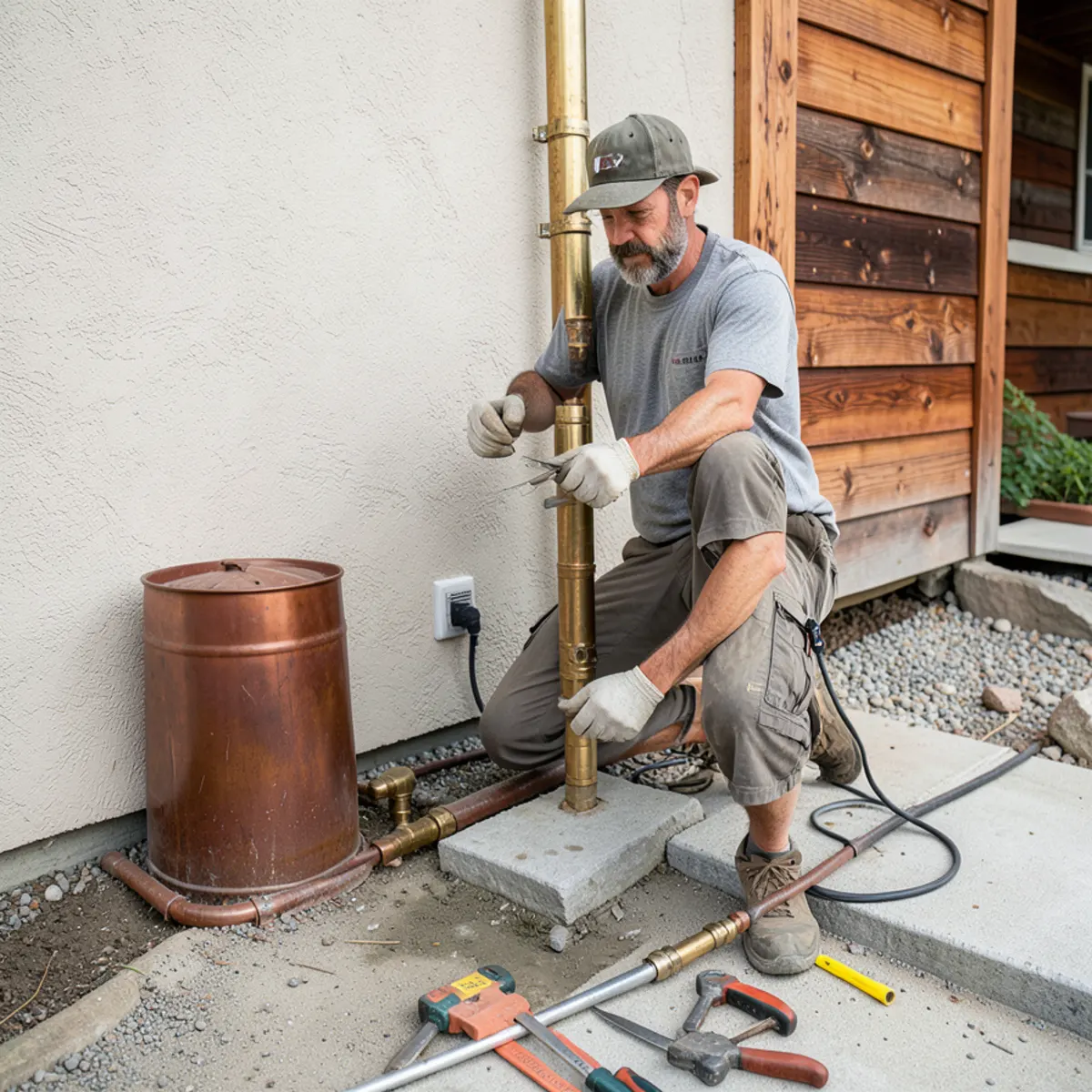
Selecting the proper pipe material depends on installation routing, seismic exposure, and local building inspector preferences. Schedule 40 black steel pipe remains the gold standard for visible, rigid gas distribution in basements, crawl spaces, and mechanical rooms due to its extreme impact resistance and high strength. For retrofitting lines through finished framing, Corrugated Stainless Steel Tubing (CSST)—such as Gastite or TracPipe—provides flexible continuous runs that bend around studs without threaded elbows. However, CSST requires strict adherence to manufacturer electrical bonding codes to prevent electrical arc punctures during nearby lightning strikes or power surges.
Key Takeaways
- Schedule 40 black iron pipe provides maximum structural rigidity and fire resistance
- CSST flexible stainless tubing reduces joints when routing through existing walls
- CSST installations require direct electrical bonding to home grounding electrode system
- Exterior underground gas lines require yellow polyethylene pipe with tracer wire
Redwood City Permitting and Air Pressure Testing Protocols
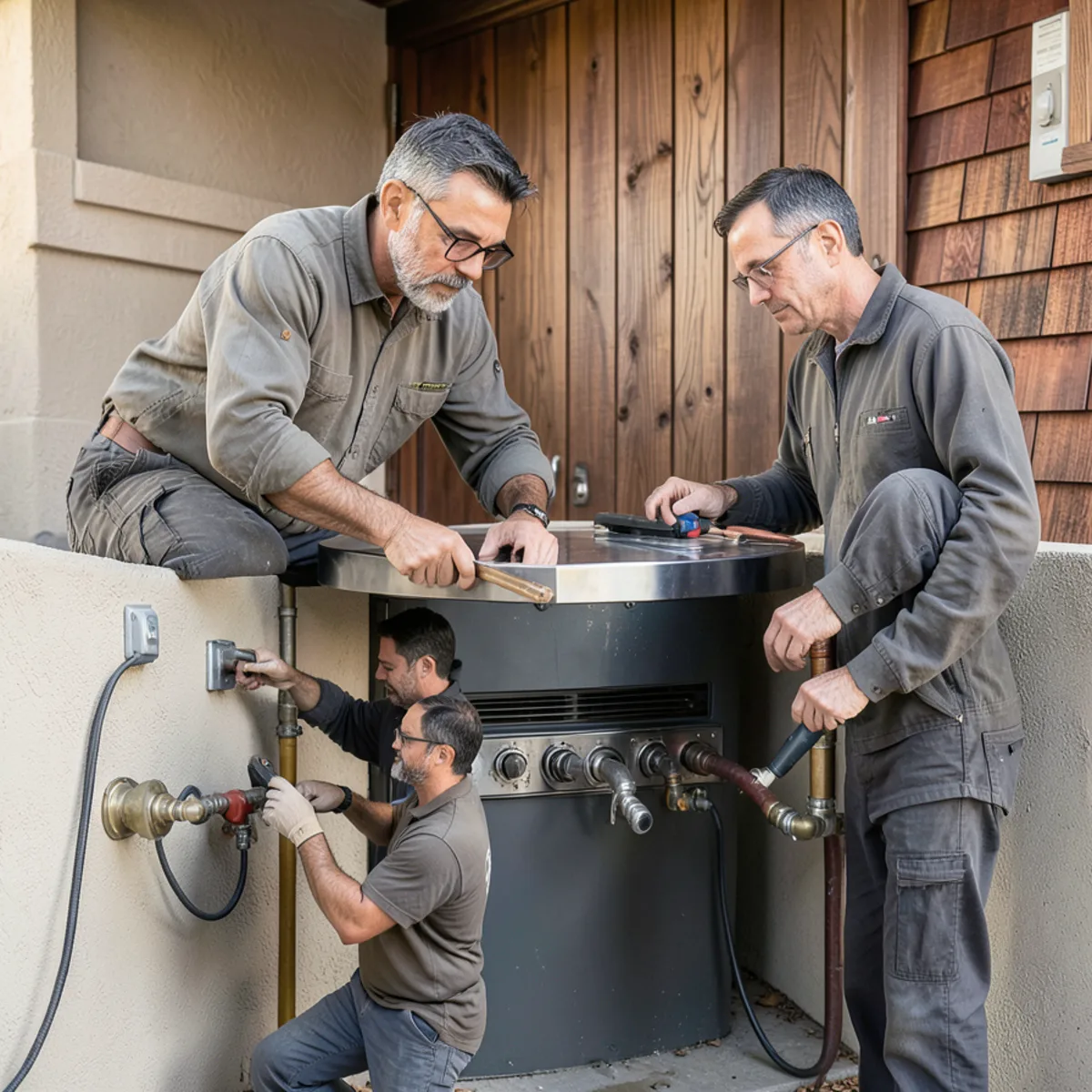
Under municipal regulations enforced by the Redwood City Building Division (1017 Middlefield Rd), modifying or extending a natural gas line requires a building permit and rigorous inspection sign-off. Before gas can be introduced into new piping, the plumber isolates the new line from the gas meter and appliances, attaches a calibrated mechanical test gauge, and pumps the system with compressed air to at least 10 to 15 PSI. The system must hold this pressure without dropping for a minimum of 15 minutes in the presence of the city building inspector. Once approved, the inspector signs the permit card, authorizing PG&E to remove the meter lock or restoring fuel service.
Key Takeaways
- Building permits mandatory through Redwood City Building Division before work begins
- System isolated and pressurized to 10 to 15 PSI with compressed air for testing
- Calibrated pressure gauge must hold static reading with zero drop during inspection
- Municipal inspector signs official permit before gas line is tied into active meter
Mandatory Safety Fixtures: Dedicated Shutoffs, Sediment Traps and Seismic Valves
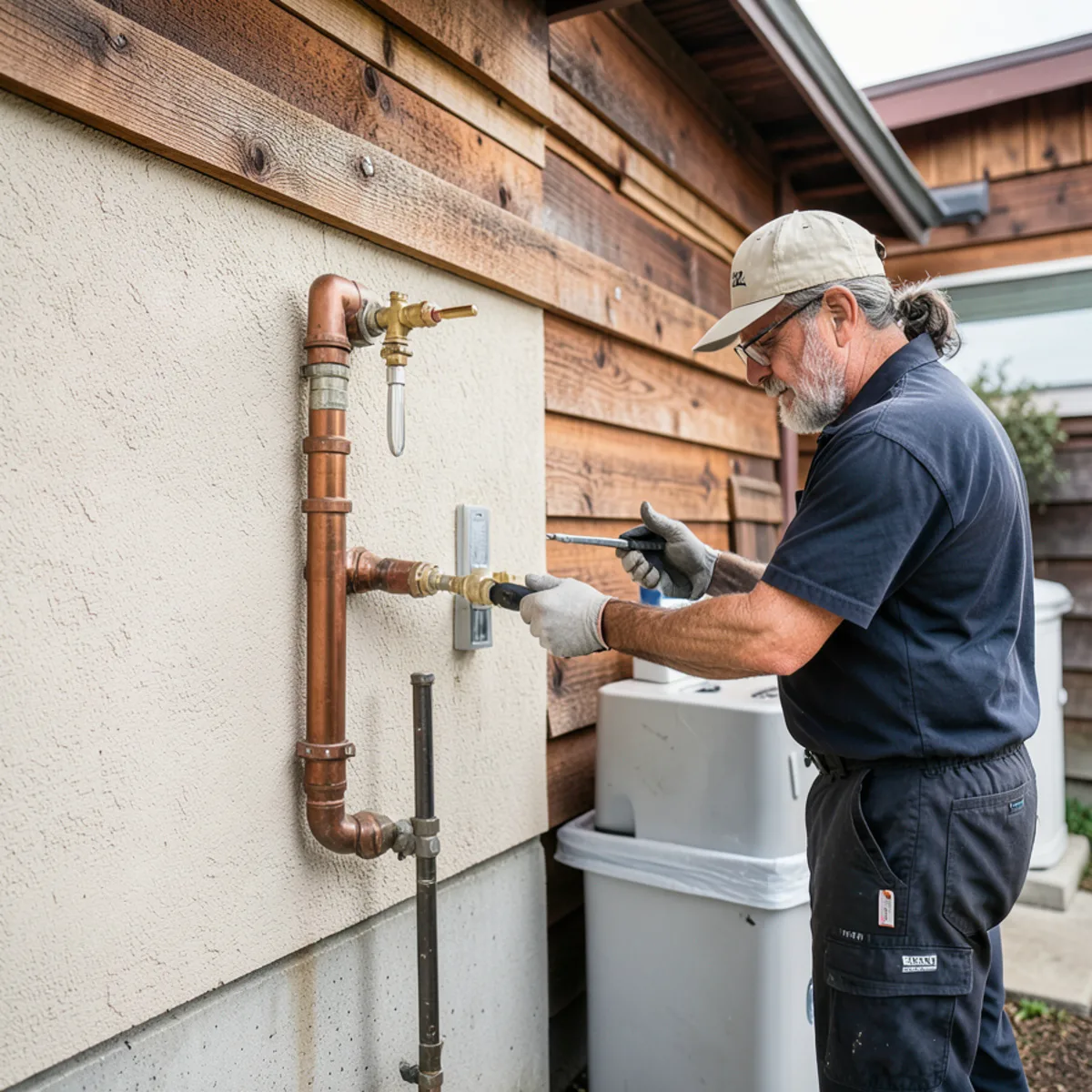
Every gas appliance installation must incorporate critical safety components. California Plumbing Code Section 1211.0 mandates an individual accessible gas shutoff valve installed within six feet of the appliance in the same room. Immediately before the appliance gas inlet, technicians install a sediment trap (dirt leg)—a vertical tee and capped nipple that utilizes gravity to capture fine pipe scale and oil before it enters delicate electronic gas control valves. Furthermore, in seismically active San Mateo County near the San Andreas fault zone, many cities and insurance carriers recommend or mandate automatic earthquake gas shutoff valves at the main meter to cut fuel flow during significant ground tremors.
Key Takeaways
- Manual quarter-turn brass gas cock mandatory within six feet of each appliance
- Sediment trap (dirt leg) prevents pipe debris from fouling electronic gas valves
- Automatic seismic shutoff valves shut gas automatically during 5.4+ magnitude earthquakes
- Flexible stainless appliance connectors cannot pass through walls, floors, or cabinets
Common Household Gas Appliance BTU Demand Ratings
| Appliance Type | Average BTU Demand | Minimum Pipe Sizing | Key Installation Code |
|---|---|---|---|
| Standard Tank Water Heater | 36,000 – 40,000 BTU | 1/2-inch black steel | Sediment trap + gas flex line |
| Condensing Tankless Water Heater | 150,000 – 199,000 BTU | 3/4-inch to 1-inch pipe | Direct run from gas meter manifold |
| Pro-Style 6-Burner Gas Range | 60,000 – 90,000 BTU | 1/2-inch to 3/4-inch pipe | Dedicated shutoff valve behind range |
| Outdoor Pool / Spa Heater | 250,000 – 400,000 BTU | 1-inch to 1.25-inch poly | Sleeved underground burial + tracer wire |
Common Questions On This Topic
Frequently Asked Questions
Find clear answers to common questions about local plumbing codes, repairs, and our Redwood City service procedures.
No. Under California Plumbing Code Section 1211.3, flexible corrugated appliance connectors cannot pass through walls, partitions, cabinets, or floors. Rigid black steel or approved CSST pipe must penetrate the cabinet wall, terminating with an approved manual shutoff valve inside the cabinet.
Regulatory References & Standards
- • California Plumbing Code Chapter 12
- • National Fuel Gas Code NFPA 54
Related Plumbing Services
Target Service Communities
Need professional assistance with this plumbing issue?
Our technicians dispatch daily from 1835 Valota Rd. Call now to speak directly with our Redwood City team.