
Should you flush your water heater? How and how often
Flushing a residential water heater annually removes accumulated calcium scale and mineral sediment that settles at the bottom of the tank, preventing premature element burnout and loud boiling noises. Connecting a standard garden hose to the bottom drain bib and opening the cold inlet valve provides a pressurized scouring flush.
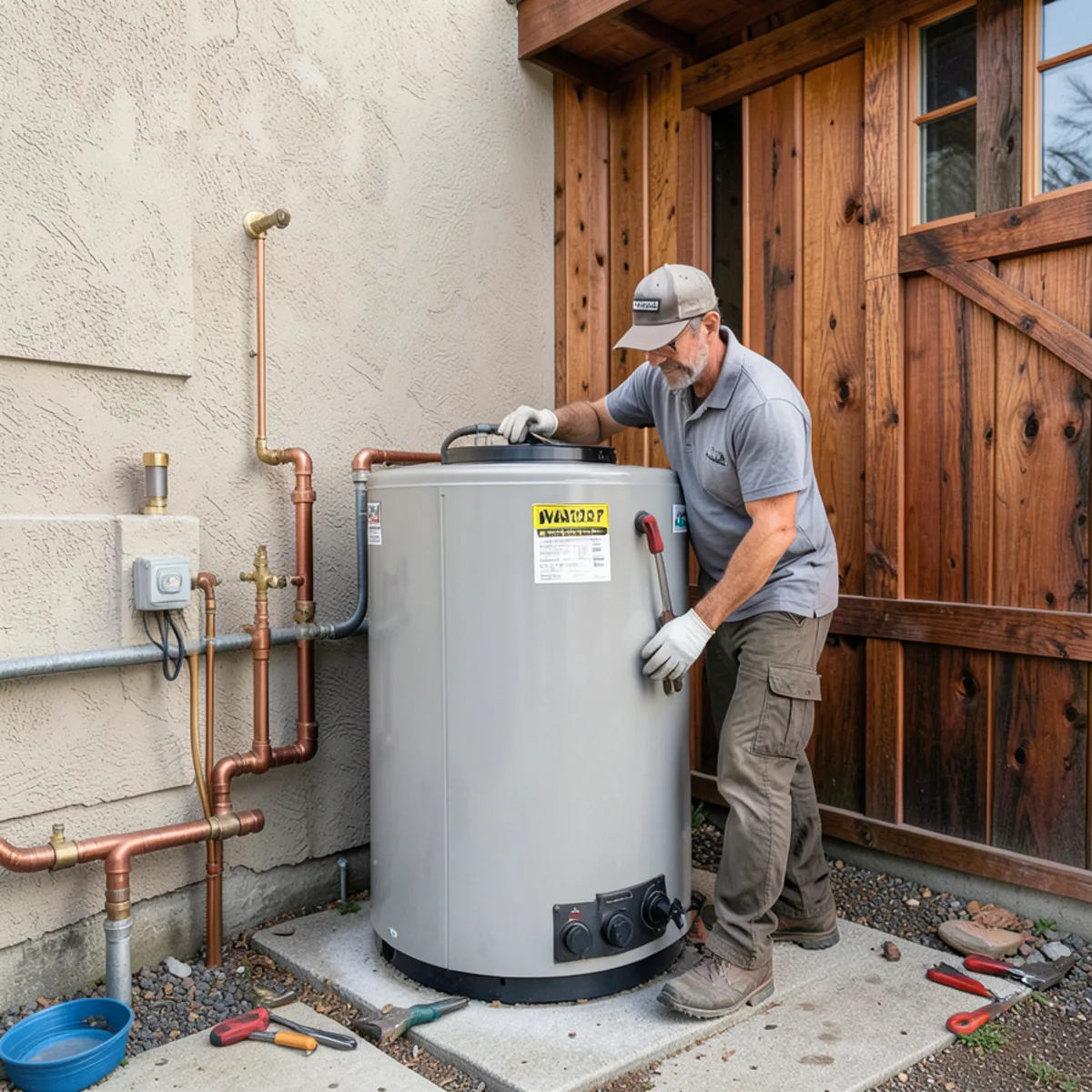
Table of Contents
Sediment Accumulation Mechanics in Water Heater Tanks
Every gallon of municipal or well water entering a residential water heater contains microscopic dissolved minerals, primarily calcium carbonate, magnesium, and fine silica sand. When water is heated, thermal precipitation causes these minerals to fall out of suspension, settling by gravity onto the concave steel bottom of the tank. Over months of heating cycles, this sediment bakes into a dense, hardened chalky crust. In gas water heaters, this sediment blanket insulates water from the 40,000 BTU burner flame below, trapping extreme heat against the bottom steel tank shell, causing popping and kettle noises, degrading thermal efficiency, and accelerating bottom weld failure.
Key Takeaways
- Dissolved calcium and magnesium precipitate out of water at high temperatures
- Sediment settles into a dense, insulating mineral layer across the bottom tank head
- Trapped burner heat causes loud popping, rumbling, and kettle boiling sounds
- Overheated steel bottom expands and contracts excessively, causing premature seam fracture
Hetch Hetchy Soft Water vs Well Blend Flushing Schedules
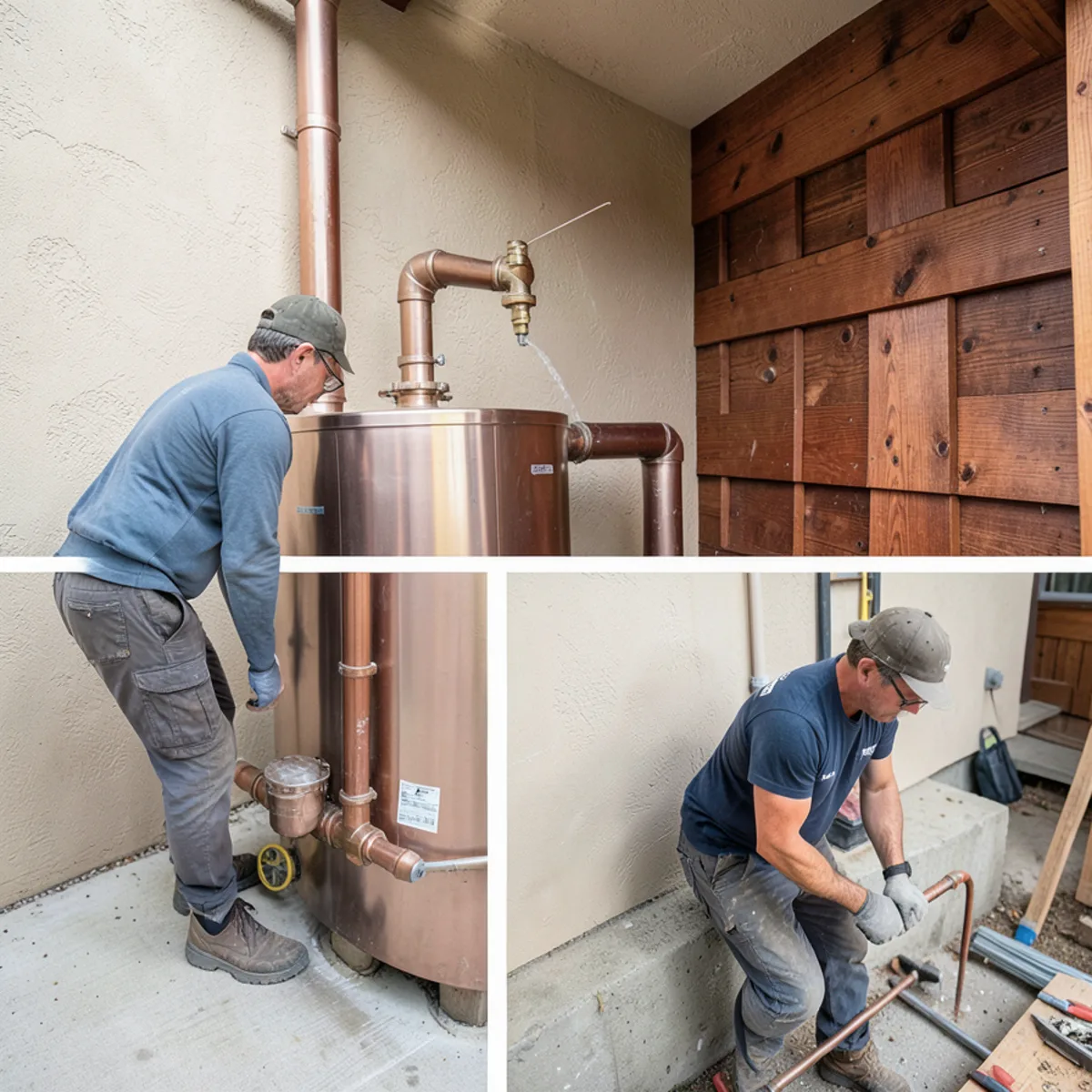
Recommended water heater maintenance frequency depends directly on local municipal water chemistry. Properties in Redwood City proper and North Fair Oaks receive municipal water from the San Francisco Public Utilities Commission (SFPUC) Hetch Hetchy reservoir. With hardness measuring only 15 to 30 parts per million (ppm), mineral scaling is minimal, making an annual or 18-month flush sufficient. Conversely, properties in Woodside, Emerald Lake Hills, and coastal San Mateo County rely on Cal Water blends or private deep wells with hardness exceeding 120 to 250 ppm. In these hard water zones, water heaters require semi-annual flushing every six months to prevent mineral accumulation.
Key Takeaways
- Redwood City Hetch Hetchy water (15–30 ppm hardness) requires flushing every 12 to 18 months
- Woodside and Emerald Lake Hills hard water zones require semi-annual 6-month flushes
- Soft water reduces sediment buildup but accelerates sacrificial anode rod consumption
- Well water systems require pre-filtration to capture abrasive silica sand and iron flakes
Step-by-Step Gravitational and Pressurized Tank Flush Protocol
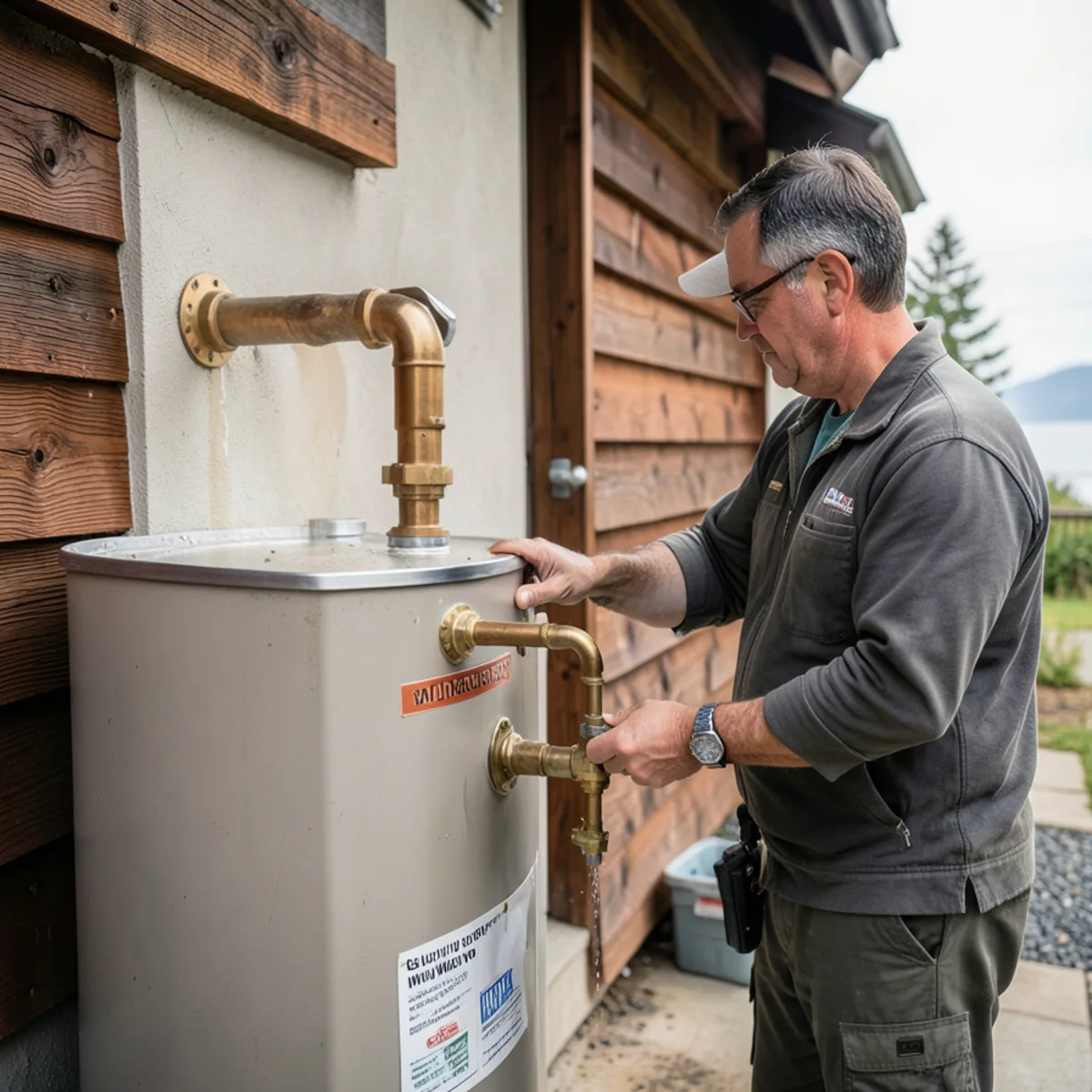
Executing a thorough water heater flush requires combining gravity draining with pulsed pressure agitation to dislodge stubborn mineral cakes. Begin by shutting off the gas control knob to PILOT or switching off the electric breaker. Attach a heavy-duty 3/4-inch garden hose to the bottom brass drain valve and route the opposite end to an exterior drain. Open the drain valve and lift the Temperature and Pressure (T&P) relief valve lever to admit air and establish gravity flow. Once the tank empties completely, leave the drain valve open and turn the cold water inlet supply valve on for 30-second bursts. The incoming 70 PSI cold water jets swirl across the bottom tank floor, lifting calcified sediment chips and flushing them through the hose.
Key Takeaways
- Isolate electrical power or turn gas thermostat control to PILOT position
- Connect heavy-duty garden hose and route to exterior safe drainage point
- Lift T&P relief valve lever or open hot sink faucet to break internal vacuum
- Pulse cold water inlet valve in 30-second bursts to scour sediment from tank bottom
Sacrificial Anode Rod Inspection and Replacement Timing
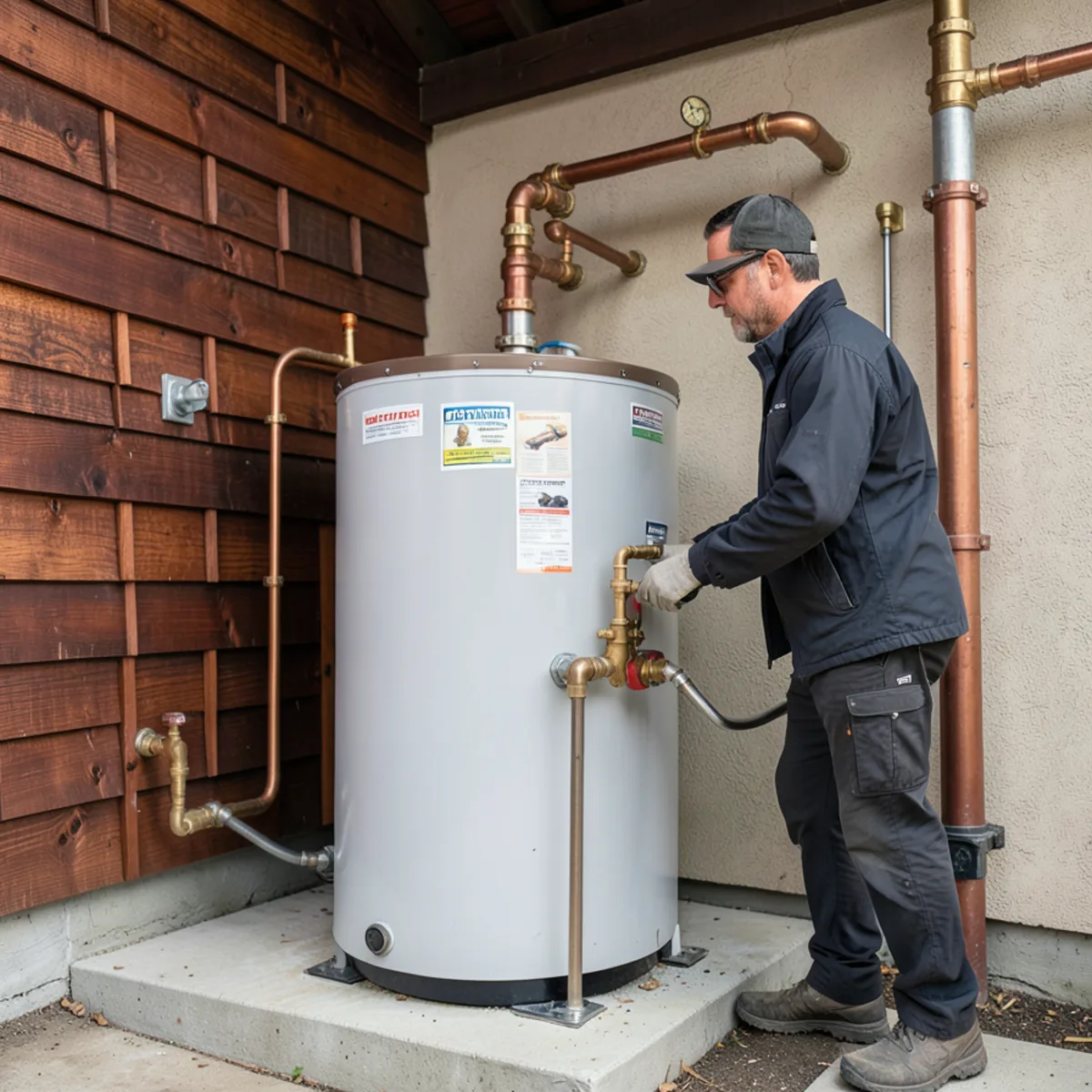
Flushing sediment protects the bottom of the tank, but protecting the inner steel walls from galvanic corrosion requires maintaining the sacrificial anode rod. The anode rod—a solid core of magnesium or aluminum extruded over a steel wire—is threaded into the top tank head. Because magnesium is electrochemically more reactive than steel, it oxidizes sacrificially, corroding away to protect the tank steel from rust. In soft Hetch Hetchy water, low mineral conductivity accelerates anode consumption. Inspect the anode rod every two years using a 1-1/16-inch socket wrench; when the rod thickness is degraded by more than 75 percent or the central steel wire is exposed, install a replacement rod immediately to extend tank life.
Key Takeaways
- Sacrificial magnesium anode oxidizes electrochemically to protect steel tank shell
- Low mineral conductivity in soft water accelerates sacrificial anode dissolution
- Inspect anode rod every 24 months using a heavy-duty 1-1/16-inch socket and breaker bar
- Replace anode rod when core steel wire is visible to prevent internal tank rust
Water Heater Maintenance Schedule
| Interval | Maintenance Task | Tool Required | Benefit |
|---|---|---|---|
| Every 12 Months | Pressurized bottom tank sediment flush | Standard garden hose + screwdriver | Eliminates popping; improves efficiency |
| Every 12 Months | T&P relief valve manual lift test | None (manual lift lever) | Verifies valve does not seize closed |
| Every 3 to 5 Years | Sacrificial anode rod inspection | 1-1/16-inch deep socket + breaker bar | Prevents steel tank rust perforation |
| Every 5 Years | Thermal expansion tank pressure check | Tire pressure gauge | Prevents 150 PSI pressure spikes |
Common Questions On This Topic
Frequently Asked Questions
Find clear answers to common questions about local plumbing codes, repairs, and our Redwood City service procedures.
Popping and rumbling sounds (often called kettling) occur when water becomes trapped beneath a dense layer of mineral sediment at the bottom of the tank. The burner boils this trapped water into steam bubbles that collapse violently as they rise through the cooler water above. Flushing the sediment eliminates the noise.
Regulatory References & Standards
- • California Plumbing Code Section 507.0
- • Manufacturer Maintenance Guidelines (Bradford White / Rheem)
Need professional assistance with this plumbing issue?
Our technicians dispatch daily from 1835 Valota Rd. Call now to speak directly with our Redwood City team.